
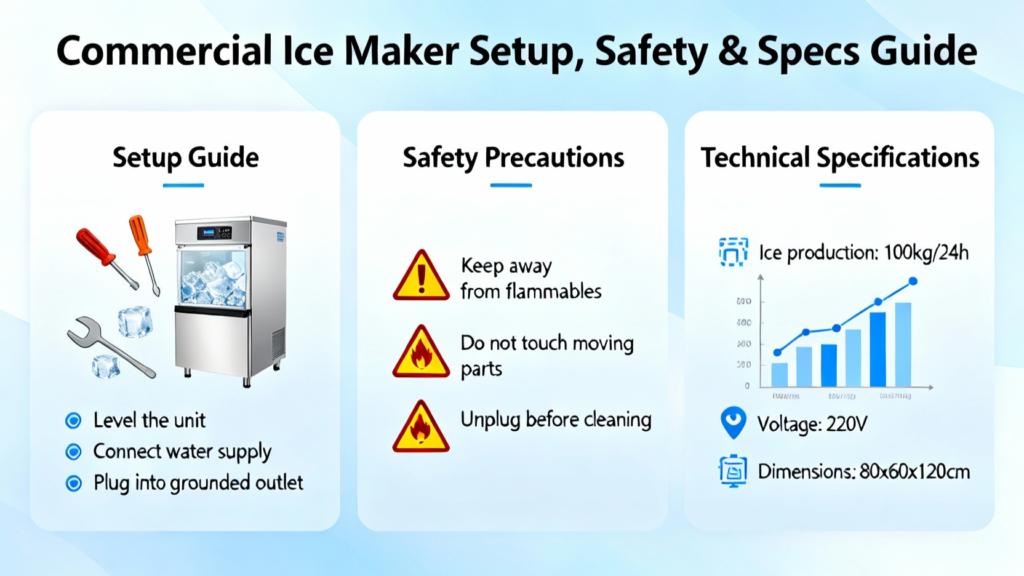
Selecting a commercial ice maker is a critical decision for any foodservice business. This guide delves into the specifications, essential installation requirements, and vital safety protocols for a durable, stainless steel unit, ensuring you maximize performance and longevity in demanding environments like restaurants, bars, and hotels.
Engineering for Demanding Environments
At its core, a heavy-duty commercial ice maker is built to withstand constant use. The stainless steel construction is non-porous, resistant to corrosion, and easy to sanitize, meeting strict health codes. Compatibility with climate types SN, N, and ST (Sub-Normal, Normal, and Sub-Tropical) means its compressor and refrigeration system are engineered to perform reliably across a wide range of ambient temperatures, a crucial factor for kitchens with variable conditions. The use of R290 refrigerant (propane) is a significant modern advancement. As noted on Wikipedia, R290 has a very low Global Warming Potential (GWP) of 3 and zero Ozone Depletion Potential (ODP), making it an environmentally superior choice, though it requires specific safety considerations during manufacturing and servicing due to its flammability.
Critical Installation and Setup Protocols
Proper installation is non-negotiable for performance and safety. The requirement for a potable water supply directly impacts ice quality and machine health, as minerals or contaminants can damage components. The water pressure specification (14.5-58 psi) is precise; pressure outside this range can lead to underfilling or valve damage, necessitating a pressure regulator. The gravity-fed drainage system mandates that the drain hose outlet is lower than the machine’s port to prevent wastewater backup, which can harbor bacteria like Legionella. Perhaps the most critical step is allowing the unit to settle upright for 24 hours after delivery. As discussed in appliance forums on Reddit, this allows compressor oil, which may have shifted during transit, to flow back, preventing immediate compressor seizure upon startup—a common point of failure highlighted by users sharing repair experiences.
Operational Safety and Best Practices
Adhering to safety guidelines protects both your investment and your premises. The prohibition against using an extension cord is rooted in electrical code principles; the high wattage (780W) startup surge of a compressor can cause undersized cords to overheat, posing a fire risk. The mandated 6-inch clearance on all sides ensures adequate airflow for the condenser coil, preventing overheating and inefficient cycling. Keeping the unit away from heat sources and direct sunlight is also vital for efficiency; as thermodynamics principles explain, the machine works harder to reject heat if the ambient temperature is elevated, increasing wear and energy use. These precautions align with broader commercial kitchen safety standards, which consistently emphasize clearances and proper electrical connections for high-draw appliances.
Maximizing Longevity and Ice Production
To ensure consistent output and a long service life, ongoing care is key. Using only clean, potable water prevents scale buildup, a primary cause of reduced production and breakdowns. The note that environmental temperature influences cycle time is critical; a unit in a 90°F kitchen will produce ice slower than one in a 70°F room, a fact often corroborated by business owners in hospitality subreddits when troubleshooting seasonal output drops. Regular cleaning and sanitizing of the water distribution system and storage bin, as per the manufacturer’s schedule, is essential. According to food safety authorities, improper ice machine maintenance is a documented vector for contamination. Establishing a routine maintenance log, as many professional chefs and facility managers recommend online, is the best practice for ensuring your commercial stainless steel ice maker remains a reliable asset.
In summary, integrating a heavy-duty commercial ice maker into your operation extends far beyond simply plugging it in. It requires a thoughtful approach grounded in understanding its engineered specifications—from the climate-compatible refrigeration system and eco-friendly R290 gas to the robust stainless steel build. The detailed installation notes on water pressure, drainage, and electrical requirements are not mere suggestions but foundational to achieving the advertised performance and avoiding premature failure. Furthermore, the operational and safety guidelines directly address the most common points of failure and risk identified in commercial settings, from inadequate ventilation to improper startup procedures. By treating these guidelines as mandatory operational protocols, you invest in the machine’s longevity, ensure food safety compliance, and guarantee a consistent supply of ice—a critical utility for any successful restaurant, bar, or hotel. Ultimately, the durability and output of the machine are secured not just by its construction, but by the rigor of its installation and daily care.
This guide really helped clarify the key specs and safety steps for setting up our new commercial ice maker.
\}}
This guide really helped clarify the key specs and safety steps for setting up our new commercial ice maker.
\}}
This guide really helped clarify the key specs and safety steps for setting up our new commercial ice maker.
\}}
This guide really helped clarify the key specs and safety steps for setting up our new commercial ice maker.
\}}
This guide really helped clarify the key specs and safety steps for setting up our new commercial ice maker.
\}}
This guide really highlights why paying attention to the commercial ice maker specs and safety is so crucial for a smooth operation.
\}}
This guide really highlights why paying attention to the commercial ice maker specs and safety is so crucial for a smooth operation.
\}}