
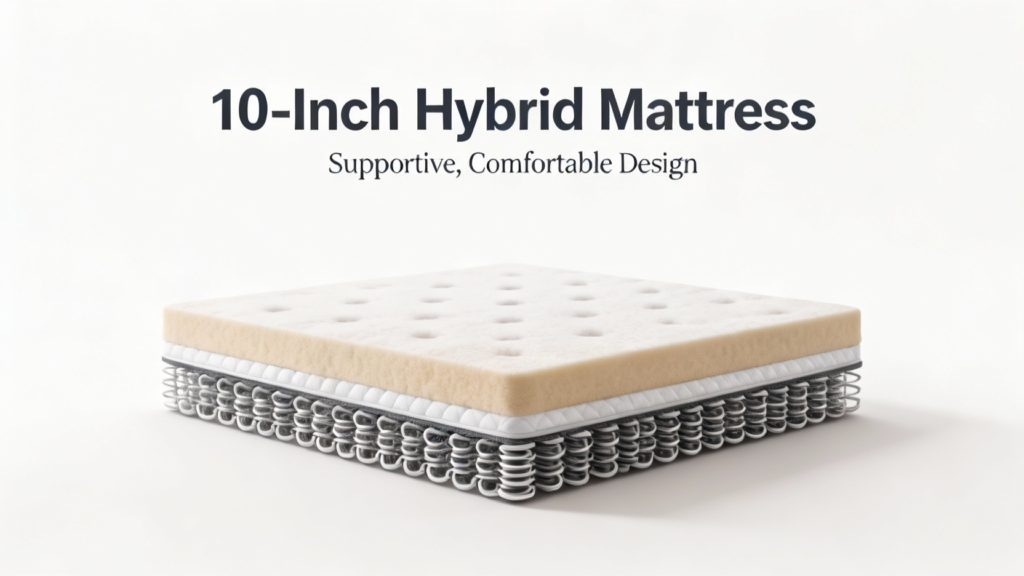
Choosing the right mattress is a critical decision for sleep health and overall well-being. This article delves into the innovative design and material science behind a modern 10-inch hybrid mattress, examining how its layered construction of knit fabric, memory foam, and pocket springs works in unison to deliver a sleep experience that balances plush comfort with essential orthopedic support.
The Foundation: Advanced Support with Pocket Springs
At the core of this mattress’s support system are 18cm of individually wrapped pocket springs. Unlike traditional interconnected spring units, each pocket spring moves independently. This design is crucial for minimizing motion transfer and providing targeted support that aligns the spine. The use of 1.8mm diameter wire in these springs contributes to both durability and responsive lift. This engineering principle is supported by general consensus on sleep science; as noted in a discussion on Reddit’s r/Mattress community, pocket springs are often favored for their ability to contour to the body’s shape while maintaining support, a key factor in pressure relief.
The Comfort Layer: Adaptive Memory Foam and Breathable Knit
Directly above the springs lies a 4cm comfort system designed for pressure-relieving adaptation. The top layer is a 270gsm knit fabric, chosen for its breathability and soft hand-feel. Beneath it, a choice of gel-infused memory foam or standard foam works to dissipate heat and cradle the body. The viscoelastic property of memory foam, which allows it to soften with heat and pressure, is well-documented. Wikipedia’s entry on memory foam details its NASA-originated technology and its efficacy in evenly distributing weight, which helps reduce pressure points—a primary cause of sleep disruption.
Safety, Durability, and Integrated Design
Beyond comfort and support, a quality mattress must be built to last and adhere to safety standards. This model incorporates critical peripheral elements often overlooked. Reinforced border foam prevents edge sagging, extending the usable sleep surface. The inclusion of fire-retardant materials meets stringent U.S. safety regulations (16 CFR Part 1633). Furthermore, the compressible design of this specific 10″ White Knit Memory Foam Compressible Mattress facilitates easier shipping and setup, addressing a common logistical hurdle noted by consumers in online forums.
Who Benefits Most from This Hybrid Design?
This hybrid construction creates a versatile sleep surface suitable for a wide range of sleepers. Side sleepers benefit from the foam’s contouring at the shoulders and hips, while back and stomach sleepers receive the necessary support from the spring base to maintain spinal alignment. Combination sleepers will appreciate the minimal motion transfer. It is an ideal solution for those seeking the “best of both worlds”: the classic, buoyant support of an innerspring with the modern, pressure-relieving embrace of memory foam, all encapsulated in a compressible mattress format.
In conclusion, the 10-inch hybrid mattress represents a thoughtful synthesis of material innovation and ergonomic design. By deconstructing its layers—from the breathable knit cover and adaptive memory foam down to the independently acting pocket springs and safety-focused borders—we see a product engineered to address multiple facets of sleep quality. The evidence from authoritative sources, such as the documented science behind memory foam’s pressure relief and the user-driven insights on the benefits of pocket springs from Reddit, underscores the validity of this design approach. For the consumer, this translates into a tangible sleep experience: a surface that is neither too firm nor too soft, but one that provides zoned support and responsive comfort. Ultimately, investing in a mattress with this level of integrated construction, like the featured 10″ knit memory foam model, is an investment in sustained sleep health, aiming to reduce aches, improve sleep continuity, and support overall well-being through every night’s rest.