
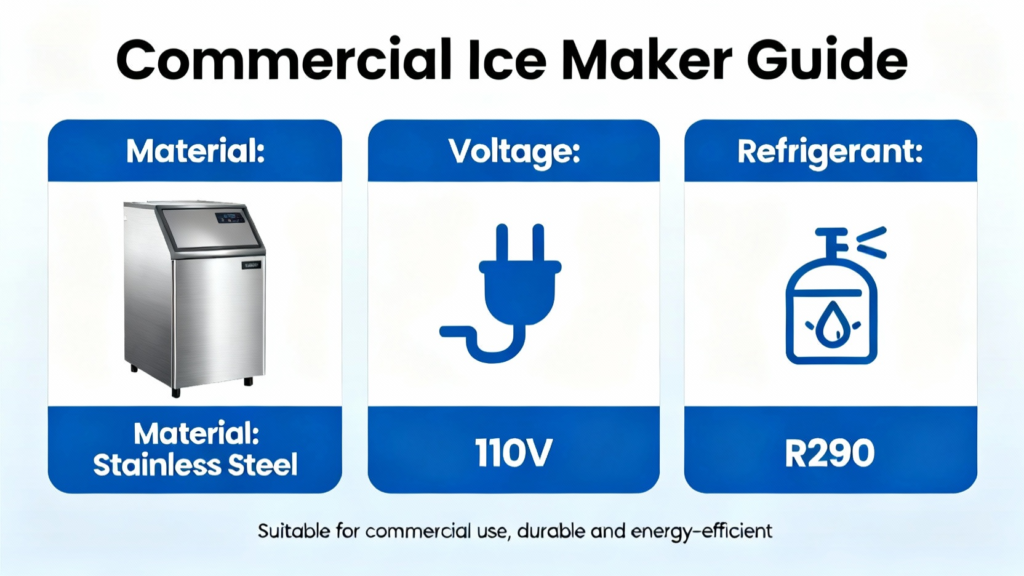
For any high-volume food service operation, a reliable ice maker is essential infrastructure. This guide delves into the critical specifications and installation requirements of a heavy-duty commercial ice maker, focusing on a model built with durable stainless steel, 110V operation, and eco-friendly R290 refrigerant. Understanding these details is key to ensuring optimal performance, safety, and longevity in demanding environments like restaurants, bars, and hotels.
Engineering for Commercial Durability and Efficiency
At the core of this commercial ice maker is its robust stainless steel construction, chosen for its resistance to corrosion, ease of cleaning, and professional appearance. The unit operates on a standard 110V/60Hz electrical circuit, drawing 780W of power, making it compatible with most commercial kitchens without requiring special electrical upgrades. A significant modern feature is its use of R290 (propane) refrigerant. According to Wikipedia, R290 has a Global Warming Potential (GWP) of just 3, far lower than traditional hydrofluorocarbon refrigerants, aligning with growing environmental regulations and sustainability goals in the foodservice industry.
Critical Installation and Site Preparation
Proper installation is non-negotiable for performance and safety. The unit requires a direct connection to a potable drinking water supply with a specific pressure range of 14.5-58 psi; outside this range, a pressure changeover valve is mandatory. As noted in a Reddit discussion on r/refrigeration, improper water pressure is a leading cause of ice maker failure. Furthermore, the machine needs a minimum of 6 inches of clearance on all sides for airflow, must be placed away from heat sources and sunlight, and requires a properly installed gravity drain line where the outlet is lower than the machine’s port to handle meltwater discharge.
Operational Safety and Initial Startup Protocol
Adhering to safety guidelines prevents hazards. The ice maker comes with a three-prong plug and a 70-inch cord; using an extension cord is strongly discouraged as it can overheat and create a fire risk. The unit must be kept away from flammable materials and is not recommended for outdoor use. A crucial, often overlooked step is the initial setup: after delivery, the unit must be left upright for 24 hours to allow the compressor oil to settle, as emphasized by professionals. As one user on a kitchen subreddit advised, skipping this step can lead to immediate compressor failure. Only pure water should be used for ice production.
Performance Expectations and Climate Considerations
This model is rated for climate types SN, N, and ST, meaning it’s designed to operate reliably in varied ambient temperatures from 50°F to 110°F (10°C to 43°C). It’s important to understand that the surrounding environmental temperature directly influences ice production cycle times; higher ambient temperatures will typically reduce output and efficiency. The heavy-duty ice maker is a self-contained unit where wastewater is discharged via gravity, underscoring the importance of correct drain installation for continuous, hygienic operation.
Conclusion
Investing in a commercial ice maker like this stainless steel, R290-powered unit requires careful attention to both its advanced engineering and its fundamental installation needs. Its durability stems from its construction and environmentally conscious refrigerant, while its reliable performance hinges entirely on correct site preparation—adequate water pressure, proper clearance, and a functional drain. The mandatory 24-hour rest period after delivery and the strict avoidance of extension cords are critical safety and longevity protocols that protect your investment. By understanding that ambient temperature affects production and following all operational guidelines, you ensure this equipment becomes a dependable workhorse. Ultimately, integrating this stainless steel ice maker correctly into your restaurant, bar, or hotel operation guarantees a consistent supply of ice, supporting seamless service and contributing to the overall efficiency and safety of your commercial kitchen for years to come.
This guide is super helpful for understanding why a durable stainless steel commercial ice maker is such a key investment for a busy kitchen.
\}}
This guide is super helpful for understanding why a durable stainless steel commercial ice maker is such a key investment for a busy kitchen.
\}}
This guide is super helpful for understanding why a durable stainless steel commercial ice maker is such a key investment for a busy kitchen.
\}}
This guide is super helpful for understanding why a durable stainless steel commercial ice maker is such a key investment for a busy kitchen.
\}}
This guide is super helpful for understanding why a durable stainless steel commercial ice maker is such a key investment for a busy kitchen.
\}}
This guide is super helpful for understanding the key specs, especially the move to the eco-friendly R290 refrigerant in a heavy-duty stainless steel unit.
\}}
This guide is super helpful for understanding the key specs, especially the move to the eco-friendly R290 refrigerant in a heavy-duty stainless steel unit.
\}}