
Heavy-Duty Commercial Ice Maker: The Ultimate Guide to Features, Installation & Safety
Selecting the right commercial ice maker is a critical decision for any foodservice operation. This comprehensive guide delves into the specifics of a robust stainless steel model, exploring its key features, essential installation requirements, and vital safety protocols to ensure optimal performance and longevity in a demanding commercial environment.
Engineering for Commercial Endurance
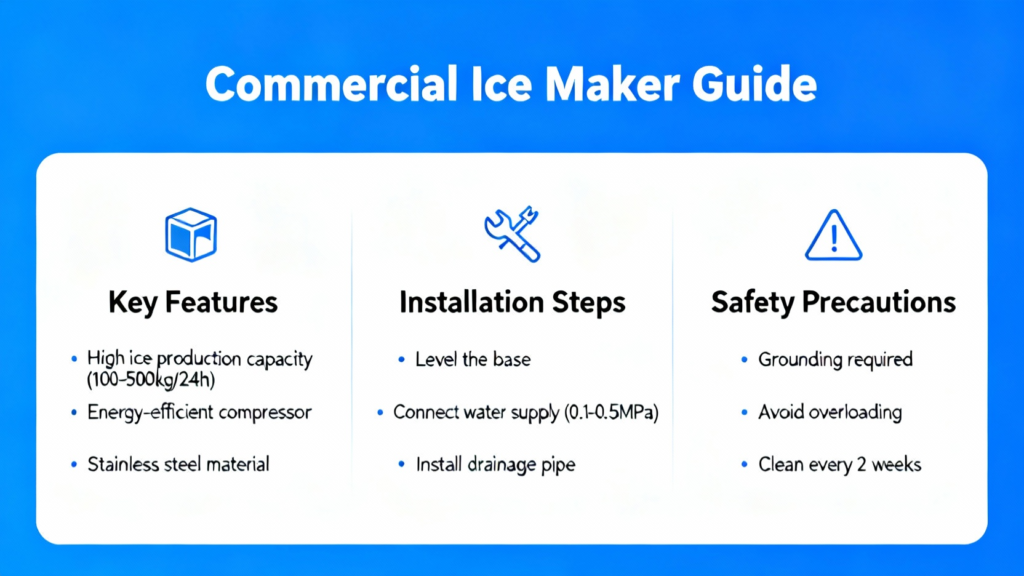
Built for the rigors of daily service, this ice maker’s durable stainless steel construction offers more than just a professional aesthetic. Stainless steel is renowned for its corrosion resistance and ease of sanitation, a crucial factor in maintaining food safety standards. The unit is designed for 110V 60Hz operation, making it compatible with standard US commercial kitchen outlets, and utilizes environmentally friendly R290 (propane) refrigerant. R290 has a significantly lower Global Warming Potential (GWP) compared to traditional hydrofluorocarbons (HFCs), aligning with growing industry and regulatory trends toward sustainability. As noted in discussions on commercial equipment, durability and serviceability are top priorities for business owners (Reddit, February 2023).
Pre-Installation: Site and Utility Requirements
Proper setup is foundational to reliable operation. This unit requires a direct connection to a drinking water supply with a specific water pressure range of 14.5-58 psi. Pressure outside this range necessitates a changeover valve to prevent mechanical issues. The installation site must provide at least 15 cm (5.9 inches) of clearance on all sides for adequate airflow, which is essential for condenser efficiency. Furthermore, the machine must be placed on a level surface near a dedicated drain, as it uses a gravity drainage system for wastewater. The importance of correct water line installation, including proper filtration, is a common point of emphasis in equipment maintenance guides to prevent scale buildup and component failure.
Critical Safety and Operational Protocols
Adhering to safety guidelines protects both your staff and your investment. Key protocols include:
- Power Safety: The included three-prong plug must be connected to a properly grounded outlet. Using an extension cord is not recommended due to the risk of overheating and fire.
- Initial Setup: After delivery, the unit must remain upright for 24 hours before being plugged in. This allows the refrigerant and oils to settle, a standard procedure for compressor longevity as referenced in compressor care guidelines (Wikipedia, “Refrigerator”).
- Environmental Safety: Keep the unit away from flammable materials, direct sunlight, and heat sources like stoves. It is designed for indoor use only (climate types SN, N, ST) and should only use pure water to make ice.
For high-volume needs, consider a model like the 23.2 in. 500 lbs./24h Capacity Commercial Stainless Steel Ice Maker for its substantial output.
Optimizing Performance and Output
Once installed, understanding operational nuances ensures you get the ice you need. The surrounding ambient temperature directly influences ice production cycles; higher room temperatures can slow production. The net weight of approximately 145 lbs and dimensions of 26.4” W x 23.2” D x 61.4” H make it a substantial countertop or freestanding unit ideal for restaurants, bars, hotels, and catering. Its Safety Protection Type I designation indicates it is engineered for commercial use. Regular cleaning and maintenance, as per the manufacturer’s schedule, are non-negotiable for consistent hygiene and output. Many operators seek reliable, high-capacity units, with some Reddit users in the industry highlighting the importance of daily cleaning routines and preventative maintenance to avoid costly downtime (Reddit, November 2022). Exploring options such as the stainless steel ice maker can be a step toward meeting such demanding operational standards.
Conclusion: A Strategic Investment for Your Business
In summary, this heavy-duty commercial ice maker represents a significant investment in the operational backbone of your foodservice business. Its durable stainless steel build, compatibility with standard US voltages, and use of eco-friendly R290 refrigerant position it as a modern, responsible choice. However, its technical potential is only fully realized through meticulous attention to the outlined installation prerequisites—from water pressure and drainage to proper clearance and electrical safety. The mandatory 24-hour settling period post-delivery and strict indoor placement are not mere suggestions but critical steps to ensure compressor integrity and safe operation. By understanding that environmental factors like ambient temperature affect production and by committing to a rigorous maintenance schedule, you safeguard this investment. Ultimately, choosing a robust unit like this, and adhering to these comprehensive guidelines, ensures a reliable supply of ice—a commodity essential to customer satisfaction and daily profitability in the hospitality industry.
This guide really helped me understand what to look for in a commercial ice maker, especially the safety tips.
\}}
This guide really helped me understand what to look for in a commercial ice maker, especially the safety tips.
\}}
This guide really helped me understand what to look for in a commercial ice maker, especially the safety tips.
\}}
This guide really helped me understand what to look for in a commercial ice maker, especially the safety tips.
\}}
This guide really helped me understand what to look for in a commercial ice maker, especially the safety tips.
\}}
This guide really helped me understand what to look for in a commercial ice maker, especially the safety tips.
\}}
This guide really helped me understand what to look for in a commercial ice maker, especially the safety tips.
\}}