
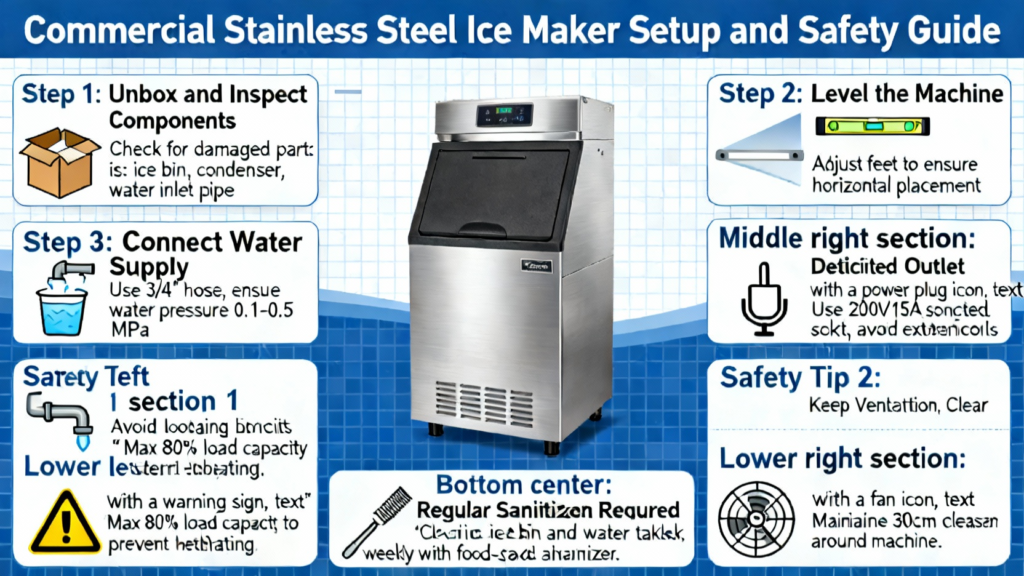
For restaurants, bars, and hotels, a reliable ice maker is a cornerstone of daily operations. This guide delves into the critical specifications and installation requirements of a heavy-duty, stainless steel commercial ice maker. We’ll explore its robust design, essential setup for optimal performance, and vital safety protocols to ensure longevity and safe operation in your business.
Engineering for Commercial Endurance
Built with durable stainless steel construction, this ice maker is designed for the rigors of high-volume environments. Its compatibility with climate types SN, N, and ST ensures reliable performance across varied environmental conditions common in commercial kitchens. The use of environmentally friendly R290 (propane) refrigerant is a forward-thinking choice, as it has a lower global warming potential compared to traditional hydrofluorocarbons (HFCs). Wikipedia notes that R290 is gaining favor due to its excellent thermodynamic properties and minimal environmental impact, though it is flammable and requires careful handling. This aligns with the unit’s Safety protection type I classification, indicating built-in safeguards for such refrigerants.
Operating on a standard 110V/60Hz circuit with 780W power consumption makes it accessible for most US commercial settings without requiring specialized electrical work. With a substantial net weight of approximately 145.51 lb and dimensions of 26.4 × 23.2 × 61.4 in, its design prioritizes stability and a high ice production capacity in a compact footprint, ideal for operations like yours.
Pre-Installation: Site and Utility Requirements
Proper installation is paramount. The unit requires a direct connection to a drinking water supply, with a critical water pressure range of 14.5-58 psi. Pressure outside this range necessitates a changeover valve to prevent machine damage. Furthermore, a gravity-fed drainage system is mandatory. As noted in the instructions, meltwater and wastewater are discharged through a port, and the drain pipe outlet must be lower than the ice maker’s outlet to function correctly.
Ventilation is another key factor. A minimum of 5.9 inches (15 cm) of clearance on all sides is required for adequate airflow, which prevents overheating and ensures efficient operation. The unit must be placed away from direct sunlight, stoves, radiators, or other heat sources, as ambient temperature directly influences ice production cycles. As one Reddit user in r/KitchenConfidential emphasized in a 2023 discussion on ice machine maintenance, “Heat kills ice machines. Give them space to breathe and keep them cool, or you’ll be calling for service every other month.”
Critical Safety and Initial Startup Protocols
Adhering to safety guidelines protects both personnel and equipment. The ice maker comes with a three-prong plug and a 70-inch cord; using an extension cord is not recommended due to the risk of overheating and fire. The unit must also be kept away from flammable materials and is not recommended for outdoor use.
Upon delivery, a specific startup procedure must be followed. After transport, the unit must be left upright for 24 hours before being plugged in. This allows the refrigerant and oils to settle, a critical step for compressor longevity. As highlighted in a r/refrigeration thread, a technician explained in November 2022, “Moving a unit can cause refrigerant migration and liquid slugging. Letting it sit stabilizes everything and prevents immediate compressor failure on startup.” After this period, allow an additional hour for the refrigerant to settle before initial use.
Optimization and Long-Term Operation
For sustained performance, use only potable water to make ice. Using other liquids can damage the internal components and contaminate the ice supply. Regular cleaning and descaling, as per the manufacturer’s instructions, are also essential to prevent mineral buildup that reduces efficiency and affects ice quality.
Understanding that ice production time is influenced by the surrounding environmental temperature helps set realistic expectations for output during peak summer periods. Investing in a robust unit like the 23.2 in. 500 lbs./24h Capacity Commercial Stainless Steel Ice Maker is about more than just making ice; it’s about ensuring a consistent, reliable supply for customer service. For businesses seeking high-volume output, exploring a commercial stainless steel ice maker with these specifications can be a cornerstone decision for operational smoothness.
In conclusion, integrating a heavy-duty commercial ice maker into your business is a significant investment that demands careful attention to detail. From its durable stainless steel construction and eco-friendly R290 refrigerant to the non-negotiable installation requirements of proper water pressure, drainage, and ventilation, each specification plays a vital role. The critical safety protocols—including avoiding extension cords, allowing proper settling time after delivery, and maintaining a safe environment—are essential for preventing hazards and ensuring equipment longevity. As evidenced by discussions among industry professionals on platforms like Reddit, overlooking these steps is a common precursor to frequent breakdowns and costly repairs. By meticulously following the guidelines for this 500 lbs./24h capacity unit, you are not just installing an appliance; you are establishing a reliable pillar of your daily service. This proactive approach to installation and maintenance guarantees a consistent ice supply, supporting seamless operations in your restaurant, bar, or hotel and ultimately contributing to customer satisfaction and business success.
This guide is a lifesaver for anyone setting up a heavy-duty stainless steel ice maker—getting those specs right from the start is so important.
\}}
This guide is a lifesaver for anyone setting up a heavy-duty stainless steel ice maker—getting those specs right from the start is so important.
\}}
This guide is a lifesaver for anyone setting up a heavy-duty stainless steel ice maker—getting those specs right from the start is so important.
\}}
This guide is a lifesaver for anyone setting up a heavy-duty stainless steel ice maker—getting those specs right from the start is so important.
\}}
This guide is a lifesaver for anyone setting up a stainless steel commercial ice maker—getting those installation specs right from the start is so important.
\}}
This guide is a lifesaver for anyone setting up a stainless steel commercial ice maker—getting those installation specs right from the start is so important.
\}}
This guide is a lifesaver for anyone setting up a stainless steel commercial ice maker—getting those installation specs right from the start is so important.
\}}
This guide is a lifesaver for anyone setting up a stainless steel commercial ice maker—getting those installation specs right from the start is so important.
\}}
This guide is a lifesaver for anyone setting up a stainless steel commercial ice maker—getting those installation specs right from the start is so important.
\}}