
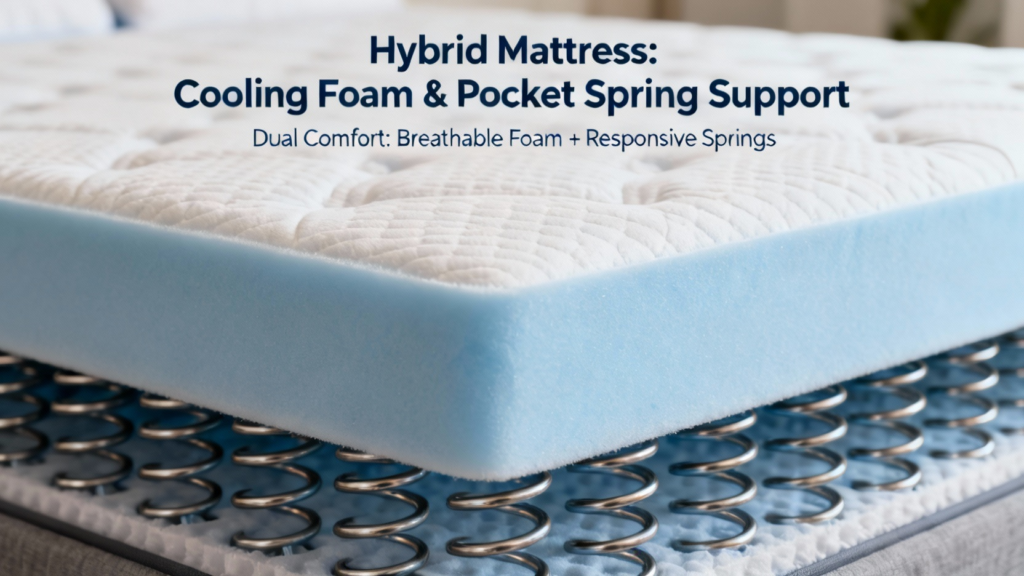
Discovering the perfect mattress involves balancing innovative materials with proven support technology. This article explores the engineering behind a modern hybrid mattress, examining how its layered construction of breathable knits, adaptive foams, and responsive pocket springs works in harmony to deliver pressure relief, cooling comfort, and durable spinal alignment for a truly restorative sleep experience.
The Foundation: Pressure-Relieving Comfort Layers
At the heart of this mattress’s comfort system are its top layers, designed for contouring and temperature regulation. The surface utilizes a 270gsm knit fabric, a high-grammage material known for enhanced breathability and durability. Beneath this, a choice of gel-infused memory foam or standard foam provides the signature adaptive feel. Memory foam, first developed by NASA in the 1970s to improve seat cushioning and crash protection for astronauts (Wikipedia), excels at pressure point relief. The optional gel infusion addresses a common critique of traditional memory foam by helping to dissipate heat, a point frequently discussed in sleep communities like r/Mattress where temperature neutrality is a key consideration for buyers (as noted in numerous threads, e.g., a October 2023 discussion on cooling mattresses). This 4cm cushioning zone is the first critical interface for body contouring.
The Core: Targeted Support with Pocket Springs
Transitioning from cushioning to core support, the mattress features an 18cm base of individually pocketed springs. Each spring, encased in its own fabric pocket, moves independently. This design is crucial for minimizing motion transfer and providing zoned support—firmly supporting heavier areas like the hips and shoulders while allowing lighter areas to sink in appropriately. The 1.8mm wire diameter indicates a robust gauge designed for longevity. This pocket spring technology directly targets proper spinal alignment, a fundamental principle for sleep health often emphasized by ergonomic experts and discussed extensively in consumer advice threads.
Safety, Stability, and Edge Support
Beyond the primary comfort and support layers, the mattress construction includes critical peripheral components. The borders incorporate additional foam and fire-retardant materials, meeting stringent U.S. safety standards like the Consumer Product Safety Commission’s 16 CFR Part 1633 for open-flame resistance. This surrounding structure also reinforces edge support, preventing the feeling of rolling off and increasing the usable sleep surface. The bottom layer is a durable polyester fabric that ensures the mattress remains stable on the bed frame, completing a package designed for all-around durability and safety.
Conclusion: A Synergy of Materials for Modern Sleep
In summary, this 10″ hybrid mattress represents a thoughtful integration of multiple sleep technologies. It begins with a breathable, high-density knit cover for moisture management, followed by a choice of advanced foam that utilizes either gel infusions or standard formulations to adapt to the body while addressing heat retention—a well-documented concern in foam materials. The core support system, built on high-quality pocket springs, provides the essential, targeted lift needed for spinal alignment and motion isolation, making it an excellent choice for couples. Finally, the reinforced borders and safety components ensure the mattress is not only comfortable but also durable and secure. For sleepers seeking a balanced feel that avoids the extreme sink of some all-foam beds or the excessive firmness of traditional innersprings, this compressible mattress offers a compelling middle ground. Its construction validates the hybrid approach often recommended for combining pressure relief with support, making it a strong contender for anyone looking to invest in a restful night’s sleep.